Ultrasonic Pest Repeller vs Bug Bomb: Which Actually Works?

Two completely opposite approaches to the same problem. A bug bomb floods your home with toxic chemical mist, hoping to kill everything it touches. An ultrasonic pest repeller emits inaudible sound waves that make pests uncomfortable enough to leave. One is violent and temporary. The other is silent and continuous. But which one actually gets rid of cockroaches, spiders, and other pests in an Australian home? We put them head-to-head.
How Bug Bombs Work
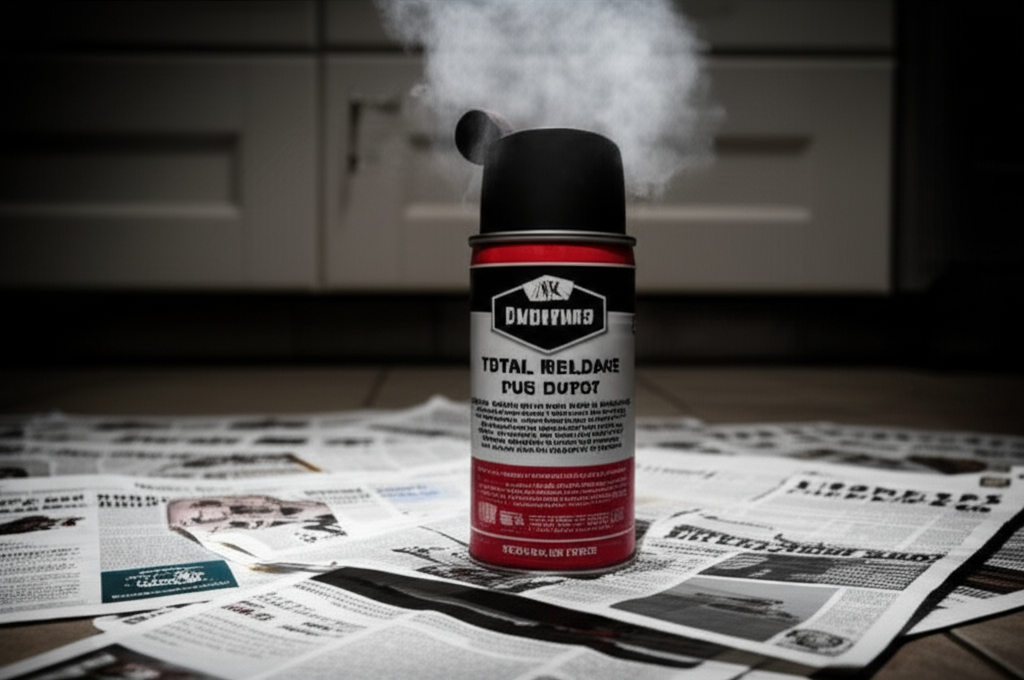
A bug bomb — also called a total release fogger — is an aerosol canister that releases a pesticide mist into an enclosed room. You place the canister in the centre of the room, press the trigger, and leave. The canister releases a fine mist of insecticide (typically pyrethroids, pyrethrins, or a combination) that fills the entire space from floor to ceiling.
The idea is simple: saturate the room with enough chemical that any insect the mist contacts will die. Bug bombs contain neurotoxic chemicals that attack an insect's nervous system on contact, causing paralysis and death within minutes to hours.
After activating a fogger, you must evacuate the room — including all people, pets, and uncovered food — for a minimum of 2–4 hours. Some products require up to 24 hours of ventilation before the space is safe to re-enter. When you return, every surface in the room is coated with a fine layer of chemical residue that needs to be wiped down, particularly kitchen benches, dining tables, and anywhere food is prepared.
How Ultrasonic Pest Repellers Work
Ultrasonic pest repellers take the opposite approach entirely. Instead of poisoning pests, they make your home so uncomfortable that pests choose to leave on their own. The device plugs into a standard power outlet and emits high-frequency sound waves between 22–65 kHz — well above the range of human hearing — that target the nervous systems of insects and rodents.
These frequencies cause neurological disruption, disorientation, and auditory stress in cockroaches, spiders, ants, mice, and other common household pests. Quality devices like BanishBugs cycle through varying frequencies to prevent habituation, creating an unpredictable acoustic environment that pests cannot adapt to. For a deeper dive into the science, read our complete guide to how ultrasonic pest repellers work.
The key difference: ultrasonic repellers don't kill pests. They create a continuous deterrent that drives pests away and prevents them from returning — 24 hours a day, 7 days a week, without you doing anything beyond plugging it in.
Head-to-Head Comparison: Bug Bomb vs Ultrasonic Repeller
The bottom line: Bug bombs win on immediate knockdown speed. Ultrasonic repellers win on safety, cost, convenience, and long-term effectiveness. For most Australian households, the ultrasonic approach delivers better results without the health risks, ongoing expense, or preparation hassle.
| Factor | Bug Bomb | Ultrasonic Repeller | Winner |
|---|---|---|---|
| Effectiveness | High initial kill on contact, but roaches scatter to walls and return within weeks | Gradual deterrence over 2–4 weeks; continuous protection once established | Ultrasonic |
| Safety | Toxic — must evacuate 2–4 hours, chemical residue on all surfaces | Completely safe — no chemicals, no toxins, no residue | Ultrasonic |
| Pet safety | Highly toxic to pets, especially fish, birds, cats, and reptiles | Safe for dogs and cats — frequencies target insects and rodents only | Ultrasonic |
| Cost | $15–$30 per treatment, needs repeating every few weeks | One-time purchase — free device + $12.95 shipping, runs on cents per month | Ultrasonic |
| Convenience | Cover food and electronics, remove pets, evacuate, ventilate, clean surfaces | Plug in and forget — zero ongoing effort | Ultrasonic |
| Environmental impact | Chemical waste, pesticide residue in air and on surfaces | Zero chemicals, zero environmental impact | Ultrasonic |
| Long-term effectiveness | Cockroaches develop chemical resistance over time; efficacy drops with repeated use | Multi-frequency cycling prevents habituation — no resistance possible | Ultrasonic |
| Speed of action | Kills on contact within minutes to hours | Gradual — 2–4 weeks for full effect | Bug bomb |
The comparison is lopsided for a reason. Bug bombs were designed for a different era — when "more chemicals = better" was the default thinking. Modern pest control has moved toward prevention and deterrence, because we now understand that killing visible pests doesn't solve the underlying problem. If your home is still attractive to roaches, more will come.
The Problem with Bug Bombs

Bug bombs have a fundamental design flaw that most people don't realise until it's too late: they make the problem worse.
The scatter effect: When you set off a bug bomb, cockroaches don't just sit there and die. The chemical mist drives them out of their current hiding spots, but instead of killing all of them, it pushes survivors deeper — into wall cavities, ceiling spaces, behind plumbing, and into neighbouring rooms. You end up spreading the infestation to areas that were previously unaffected.
Beyond the scatter effect, bug bombs have several other critical problems that limit their usefulness as a cockroach treatment:
- They don't reach nests. The mist settles on exposed surfaces but can't penetrate into wall voids, under flooring, or behind built-in appliances where cockroach colonies actually live and breed. You kill the scouts but leave the colony intact.
- They don't destroy eggs. Cockroach egg cases (oothecae) are naturally resistant to most chemical foggers. So even if you kill every adult in the room, the next generation hatches two weeks later and the cycle restarts.
- Chemical resistance is accelerating. Australian cockroach populations — particularly German cockroaches — have developed significant resistance to pyrethroid-based insecticides. Research shows that each generation exposed to sub-lethal doses becomes harder to kill, meaning your bug bomb gets less effective every time you use it.
- Health risks are real. Pyrethroid residue lingers on surfaces for weeks. Repeated exposure has been linked to respiratory irritation, skin reactions, and endocrine disruption. For households with young children who crawl on floors and put things in their mouths, the risk-reward equation doesn't stack up.
This is why many pest professionals in Australia now advise against using bug bombs as a first-line treatment. They create a false sense of progress — you see dead roaches on the floor and think it worked — while the real colony is deeper in your walls than before.
When a Bug Bomb Might Be Necessary

Despite all of the above, there is one scenario where a bug bomb serves a legitimate purpose: severe active infestations that need an immediate knockdown.
If you're dealing with a genuinely overwhelming cockroach population — the kind where you turn on the kitchen light at night and see dozens scattering — a one-off fog can reduce the visible population quickly. Think of it as emergency triage, not a cure.
The smart approach is to treat the bug bomb as step one of a two-step strategy:
- Bug bomb once to knock down the active population and reduce numbers quickly.
- Install ultrasonic repellers immediately after for continuous, long-term prevention that stops survivors from re-establishing and prevents new pests from moving in.
This combination gives you the immediate relief of a chemical knockdown with the lasting protection of ultrasonic deterrence. The bug bomb handles today's problem. The repeller handles tomorrow's.
Pest control that only works when you actively do something is pest control that eventually fails. The most effective approach is one that runs continuously without your involvement — creating an environment that pests don't want to enter in the first place. That's the fundamental advantage of an ultrasonic repeller over a bug bomb. One requires your constant attention and repeated purchases. The other runs silently in the background, 24/7. For more chemical-free pest control methods, see our complete guide.
Frequently Asked Questions
Are bug bombs effective for cockroaches long-term?
Bug bombs provide a short-term knockdown of visible cockroaches but are not effective long-term. The chemical mist cannot reach roaches hiding inside walls, behind appliances, or under flooring — where most of the colony actually lives. Surviving roaches scatter to untreated areas and return once the chemicals dissipate. Repeated use also accelerates chemical resistance, making each subsequent treatment less effective. For lasting cockroach control, a continuous deterrent like an ultrasonic pest repeller is more reliable.
Can I use a bug bomb and an ultrasonic repeller together?
Yes, and this combination is actually the most effective approach for severe infestations. Use a bug bomb as a one-off knockdown treatment to reduce the active population, then install ultrasonic repellers for ongoing prevention. The bug bomb handles the immediate problem while the ultrasonic device creates a continuous deterrent that stops pests from returning. Just ensure you ventilate the room thoroughly after the bug bomb before plugging in any electronics.
Are bug bombs safe to use around pets and children?
Bug bombs are not safe for pets or children during and immediately after treatment. You must evacuate all people and animals for a minimum of 2–4 hours, and some products require up to 24 hours. The pyrethroid and pyrethrin chemicals are particularly toxic to cats, fish, birds, and reptiles. Chemical residue remains on surfaces after treatment and requires thorough cleaning before the space is safe for children who crawl or play on floors. Ultrasonic pest repellers, by contrast, are completely safe for all household members including pets.
Why do I see more roaches after setting off a bug bomb?
This is called the scatter effect, and it's one of the biggest problems with bug bombs. When you set off a fogger, the chemical mist drives cockroaches out of their current hiding spots — but instead of killing them, it pushes many of them deeper into walls, ceiling cavities, and neighbouring rooms. You see more roaches temporarily because they're fleeing the chemicals, and you end up with a wider infestation than you started with. This is why pest professionals often advise against bug bombs as a first-line treatment.
Ready to Ditch the Chemicals?
Take our 30-second quiz to find out how many BanishBugs devices your home needs. The device is free — just pay $12.95 shipping. 90-day money-back guarantee.
Take the Quiz →