7 Chemical-Free Pest Control Methods Compared: Which Actually Works in Australian Homes?
If you've ever sprayed a cockroach with insecticide and then wondered whether you just made your kitchen worse for your family than the cockroach did, you're not alone. Across Australia, more households are questioning the trade-off between killing pests and exposing their kids, pets, and themselves to chemical residues.
The concern is well-founded. Research from the Australian Department of Health links long-term exposure to household pesticides with respiratory problems, hormone disruption, and increased health risks for young children. For families with curious toddlers who put everything in their mouths, or dogs who lick every surface they encounter, the risk calculus is shifting.
The good news: effective chemical-free pest control options exist today. Some are ancient, some are modern, and they vary wildly in cost, effectiveness, and practicality. This guide compares seven of the most common natural pest control methods available in Australia, with honest assessments of each, so you can choose what actually suits your home.
Why Go Chemical-Free?
Before we compare methods, it's worth understanding what you're avoiding. Traditional chemical pesticides, including common supermarket sprays and baits, typically contain organophosphates, pyrethroids, or neonicotinoids. Here's why Australian families are increasingly looking for alternatives:
- Health risks for humans. Short-term exposure can cause headaches, nausea, skin irritation, and respiratory issues. The National Pesticides Information Service reports that children are disproportionately affected due to their smaller body weight and developing organs.
- Pet toxicity. Cats are especially sensitive to pyrethroids, a common ingredient in household sprays. Dogs who walk across treated surfaces and then lick their paws can ingest harmful doses. Pet-safe pest control is a genuine concern, not marketing hype.
- Environmental impact. Chemical runoff from homes enters waterways and soil. In Australia, where biodiversity is a national treasure, the impact on native insects, lizards, and birds is significant. Neonicotinoids alone have been linked to pollinator decline across multiple studies.
- Residue build-up. Sprays leave chemical residues on surfaces where your family eats, sleeps, and plays. These residues can persist for weeks, particularly on soft furnishings and carpets.
The question isn't whether to reduce chemical use. It's which alternatives actually work.
7 Chemical-Free Pest Control Methods Compared
Here's a side-by-side comparison of seven popular non-toxic pest control methods available to Australian households:
| Method | Effectiveness | Ongoing Cost | Pet Safe | Ease of Use | Best For |
|---|---|---|---|---|---|
| Ultrasonic Repellers | High | $0/month | Yes | Plug & forget | Continuous prevention |
| Diatomaceous Earth | High (insects) | $5-15/month | Caution | Moderate | Crawling insects |
| Essential Oils | Low-Mild | $10-20/month | Varies | Moderate | Mild deterrent |
| Boric Acid | High (roaches) | $5-10/month | No | Moderate | Cockroaches, ants |
| Physical Barriers | High (prevention) | $0 after install | Yes | One-time effort | Entry point sealing |
| Vinegar & Citrus | Low | $2-5/month | Yes | Easy | Ants, surface cleaning |
| Professional Heat | Very High | $500-1,000+ | Yes | Professional does it | Severe infestations |
Now let's break down each method in detail so you can decide what's right for your situation.
1. Ultrasonic Pest Repellers
Ultrasonic pest repellers emit high-frequency sound waves that are inaudible to humans and household pets but create an intensely uncomfortable environment for common pests. Rather than killing pests, they drive them out of your living spaces and deter new ones from entering.
The key advantage is that they're genuinely set-and-forget. You plug the device into a power outlet, and it works 24/7 without any ongoing maintenance, reapplication, or mess. There's no residue, no smell, and nothing for children or pets to accidentally ingest. For a deeper look at the science, read our guide on how ultrasonic pest repellers work.
Devices like BanishBugs are designed specifically for Australian homes and target common local pests including cockroaches, spiders, mice, and rats. At a one-time cost with free device and just $12.95 shipping, the ongoing cost is essentially zero. The trade-off? They work best as a continuous prevention tool. If you already have a severe infestation, you may need to pair them with a more aggressive method first.
Best for: Families wanting continuous, zero-effort, completely safe pest prevention. Works across multiple pest types simultaneously.
2. Diatomaceous Earth
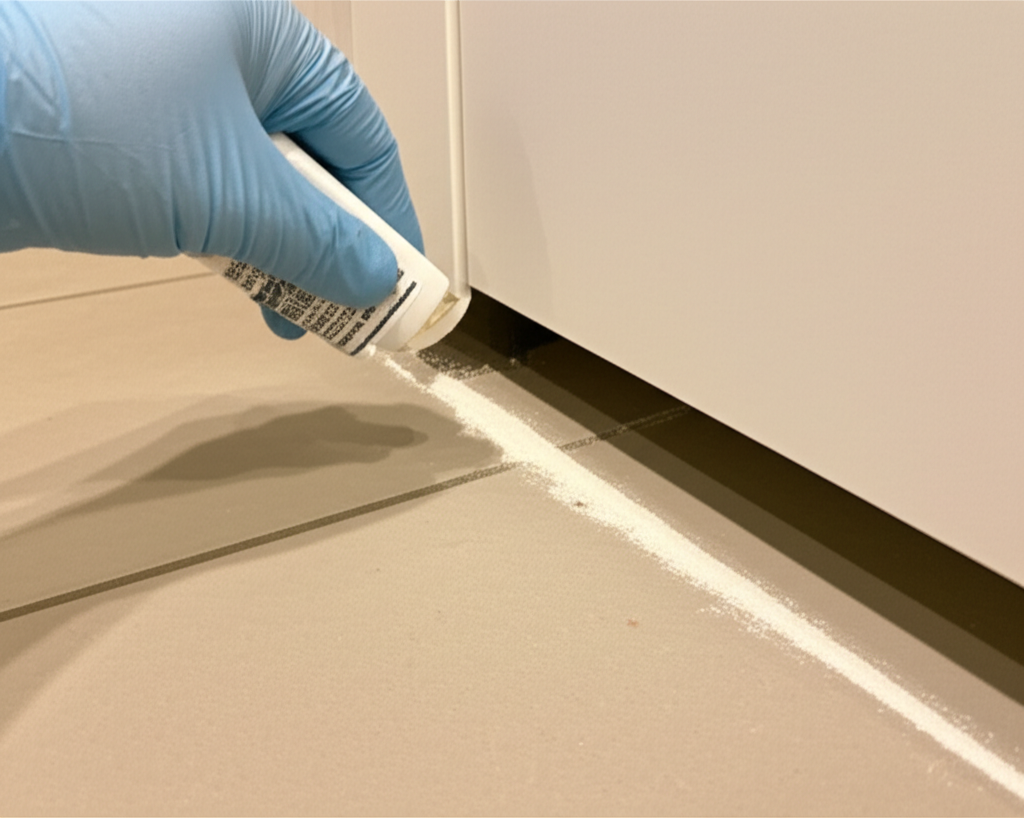
Food-grade diatomaceous earth (DE) is a fine powder made from fossilised algae. At the microscopic level, it's razor-sharp. When insects crawl through it, it damages their exoskeletons and dehydrates them. It's highly effective against crawling insects including cockroaches, ants, silverfish, and bed bugs.
The challenge is practicality. DE needs to be applied as a dry powder in areas where pests travel, typically along skirting boards, behind appliances, and under sinks. It loses effectiveness when wet, which is a problem in humid Australian climates, particularly up north. It also needs regular reapplication and creates visible dusty residue throughout your home.
While food-grade DE is technically safe to ingest in small amounts, inhaling the fine particles can irritate lungs, especially for children, asthmatics, and pets who are close to the ground. You'll want to wear a mask during application and keep kids and animals away until the dust settles.
Best for: Targeting specific crawling insect problems in dry areas. Works well in crevices and hidden spots where the mess isn't visible.
3. Essential Oils
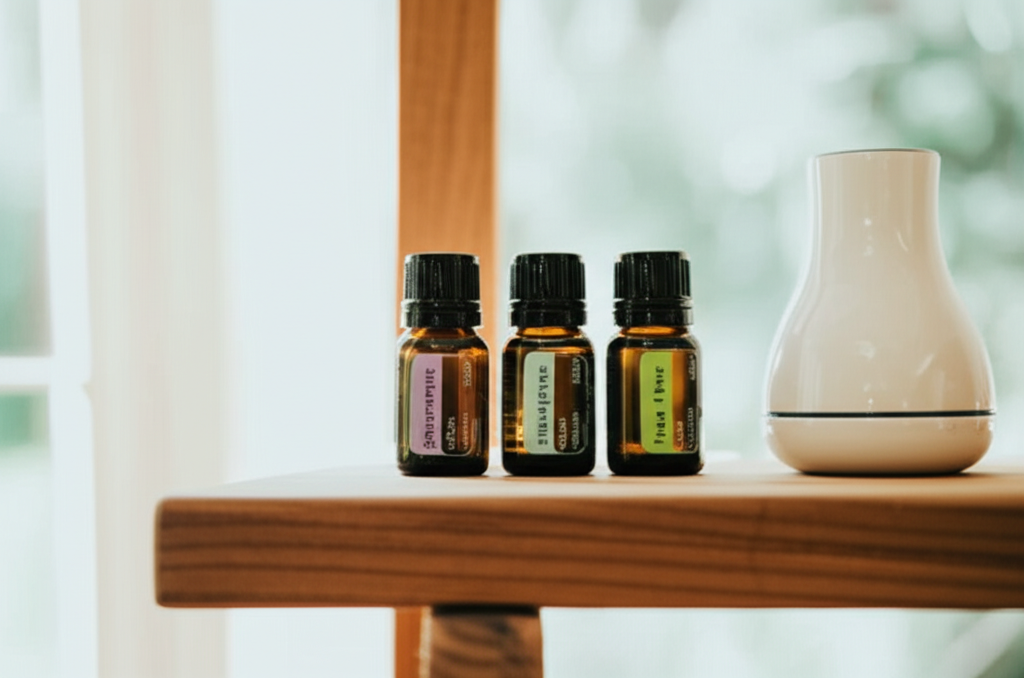
Peppermint oil, eucalyptus oil, tea tree oil, and citronella are frequently recommended as natural pest deterrents. The theory is sound: many pests find these scents unpleasant and will avoid treated areas. Eucalyptus is particularly popular in Australia given local availability.
The reality is more modest than the marketing suggests. Essential oils provide a mild repellent effect at best. They evaporate quickly, requiring reapplication every few days, and their concentration drops rapidly after application. For anything beyond discouraging the occasional ant from a benchtop, they're unlikely to provide meaningful protection on their own.
There's also an important safety note: several essential oils, including tea tree and eucalyptus, are toxic to cats. Dogs can also be sensitive. If you have pets, research each specific oil before diffusing or spraying it. The "natural" label doesn't automatically mean safe for all animals.
Best for: A supplementary deterrent alongside more effective methods. Pleasant scent is a bonus for humans, even if the pest-repelling effect is limited.
4. Boric Acid
Boric acid is one of the most effective non-chemical options for cockroaches specifically. Mixed with a bait like sugar or peanut butter, it's ingested by roaches who then carry it back to their nest, creating a cascading kill effect. It also works well against ants and silverfish.
However, calling boric acid "chemical-free" is a stretch. While it's a naturally occurring mineral, it's genuinely toxic if ingested by pets or children. Even small amounts can cause vomiting, diarrhoea, and kidney problems in dogs and cats. For households with young kids who play on floors, or pets who investigate everything with their mouths, boric acid presents a real risk.
Application requires mixing and placing bait stations in strategic locations, typically behind appliances, under sinks, and along walls. It's more targeted than a spray, which is good, but it still requires handling a toxic substance and ensuring it's placed entirely out of reach of non-target family members.
Best for: Severe cockroach problems in homes without young children or pets. Effective but requires careful placement and monitoring.
5. Physical Barriers
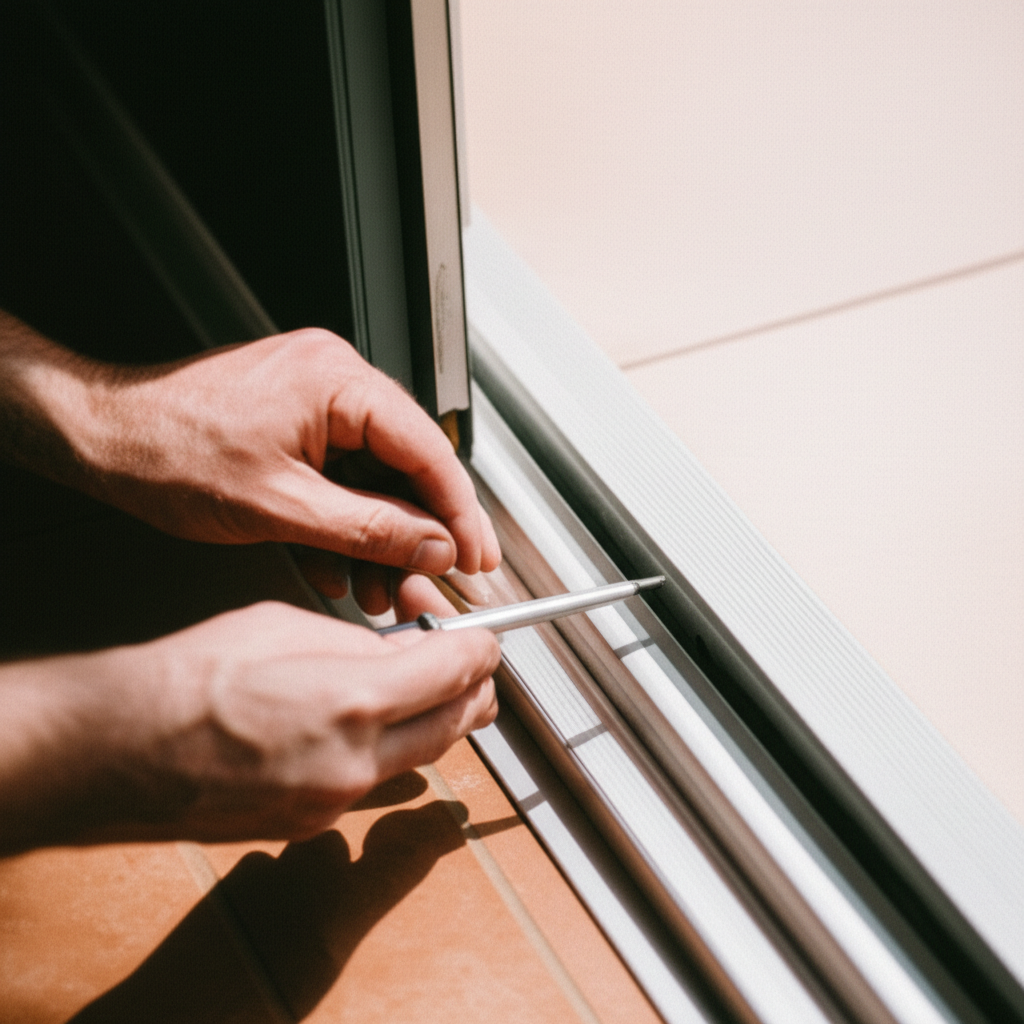
This is the least glamorous method on the list, and one of the most effective. Physical barriers mean mesh screens on windows, door sweeps on external doors, caulking gaps around pipes and cables, and sealing cracks in foundations and walls. You're simply blocking the entry points pests use to get inside.
In Australian homes, the most common entry points are gaps under doors (especially the gap between garage and living space), unsealed pipe penetrations in kitchens and bathrooms, torn flyscreen mesh, and gaps around air conditioning units. A weekend spent identifying and sealing these entry points can dramatically reduce pest pressure.
The limitation is obvious: physical barriers are preventative only. They don't address pests already inside your home, and they require a thorough initial audit to identify all entry points. Older Australian homes, particularly Queenslanders and weatherboard houses, often have numerous gaps that are difficult to fully seal.
Best for: The foundation layer of any pest prevention strategy. Works best when combined with an active deterrent method for pests that find their way past your defences.
6. Vinegar and Citrus Sprays
A spray bottle filled with equal parts white vinegar and water, or water infused with citrus peels, is a classic home remedy for ants. The acetic acid in vinegar disrupts the scent trails ants use to navigate, temporarily confusing and deterring them from treated surfaces.
It works, but only in the most limited sense. Vinegar sprays provide a temporary repellent effect that fades within hours. They need constant reapplication, they make your house smell like a chip shop, and they do absolutely nothing for pests other than ants. Citrus sprays are milder still.
That said, vinegar sprays are completely safe for pets and children, cost almost nothing, and serve double duty as a surface cleaner. For a minor ant problem on kitchen benchtops, it's a reasonable first response while you implement more permanent solutions.
Best for: A quick, temporary fix for minor ant problems. Not a standalone solution for any serious pest issue.
7. Professional Heat Treatment
Professional heat treatment involves raising the temperature of an infested area to 55-60°C using specialised equipment. At this temperature, virtually all pests and their eggs are killed, including bed bugs, cockroaches, and stored product pests. It's completely chemical-free and highly effective.
The downsides are significant for most households. A single treatment typically costs between $500 and $1,000 for a standard room, and more for whole-house treatment. You'll need to vacate the home during treatment and remove heat-sensitive items. It's a one-time solution that doesn't prevent re-infestation, meaning pests can return if the underlying conditions (entry points, food sources) aren't addressed.
Heat treatment is available in most major Australian cities, though options are more limited in regional areas. It's most commonly used for bed bug infestations, where it's considered the gold standard.
Best for: Severe infestations, particularly bed bugs, where you need a guaranteed one-time kill. Not practical for routine pest prevention due to cost.
Which Method Is Best for Australian Homes?
The honest answer: it depends on your pest problem, your home, and your family situation. There's no single eco-friendly pest control method that covers every scenario perfectly. But there is a strategy that works for most Australian households.
The combination approach: Use physical barriers to seal entry points and block pests from getting in. Use an ultrasonic repeller for continuous, zero-maintenance deterrence of pests already nearby. Add targeted methods (like diatomaceous earth in hidden spots) for specific insect problems if needed.
This layered approach gives you both passive protection (barriers) and active deterrence (ultrasonic) without any chemicals, ongoing mess, or safety concerns for kids and pets. It's the approach most consistent with how pest management professionals think: don't rely on a single line of defence.
For most families, the key criteria are safety and sustainability. You want something that works continuously without requiring you to remember reapplication schedules, avoid toxic substances, or spend hundreds of dollars per treatment. That combination of physical barriers plus ultrasonic repellers ticks every box.
Frequently Asked Questions
What is the most effective chemical-free pest control method?
No single method works best in every situation. For continuous, low-maintenance protection, ultrasonic pest repellers are the most practical option for Australian households. For best results, combine ultrasonic repellers with physical barriers like door seals and mesh screens to both deter pests and block their entry points.
Are chemical-free pest control methods safe for pets and children?
Most chemical-free methods are safe for pets and children, but not all. Ultrasonic repellers, physical barriers, and vinegar sprays are completely safe. However, boric acid is toxic if ingested by pets or children, and diatomaceous earth can irritate lungs if inhaled. Some essential oils are toxic to cats. Always check each method's safety profile before using it around your family. See our full pet-safe pest control guide for details.
Do ultrasonic pest repellers actually work in Australia?
Yes, ultrasonic pest repellers work by emitting high-frequency sound waves that are inaudible to humans and household pets but deeply uncomfortable for common Australian pests including cockroaches, spiders, mice, and rats. They are most effective when used as a continuous prevention tool rather than a one-off treatment, and work best in combination with other methods like sealing entry points. Learn more about how ultrasonic technology works.
Not Sure Which Method Is Right for Your Home?
Take our 60-second quiz to get a personalised pest control recommendation based on your home, your pests, and your family situation.
FREE device · $12.95 shipping · 90-day money-back guarantee