Correctly identifying cockroach species in Australia is the single most important step before choosing a treatment method. Different species require different control strategies. A German cockroach infestation inside your kitchen cupboards demands a completely different approach than the large Australian cockroach wandering in from your garden beds. Use the wrong method and you waste time, money, and patience while the colony grows.
Australia is home to around 450 native cockroach species, but only five regularly invade homes and buildings. These five species vary dramatically in size, colour, behaviour, and the health risks they pose. Some breed exclusively indoors. Others are outdoor species that enter opportunistically. Some fly. Some barely move. Knowing which cockroach you're dealing with lets you target your response precisely — whether that's choosing the right elimination method, calling a professional, or setting up long-term prevention with an ultrasonic pest repeller.
This guide covers the five most common cockroach species found in Australian homes, how to tell them apart at a glance, and which control methods work best for each.
The 5 Most Common Cockroaches in Australian Homes
Below are the five cockroach species you're most likely to encounter in an Australian home. Each entry covers size, colour, preferred habitat, behaviour patterns, and the level of health risk they pose.
1. German Cockroach
Blattella germanica
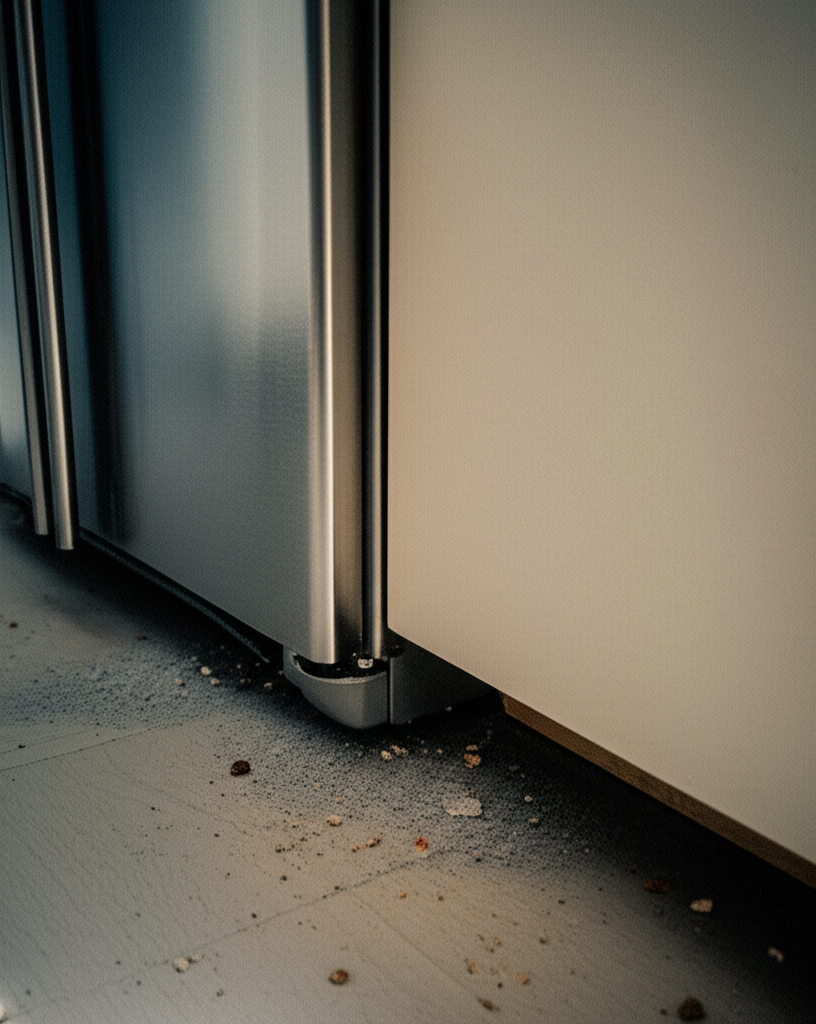
The German cockroach is the most problematic cockroach species in Australian homes. It is small, light tan to brown in colour, and has two distinctive dark parallel stripes running down the pronotum (the shield behind its head). German cockroaches live exclusively indoors in Australia — you will not find established colonies in gardens or outdoor areas. They prefer warm, humid spaces close to food and water: inside kitchen cupboards, behind refrigerators, around dishwashers, beneath sinks, and inside bathroom cabinets. A single female can produce over 30,000 offspring per year, making this species capable of explosive population growth. German cockroaches are the species most strongly linked to the spread of Salmonella, E. coli, and allergens that trigger asthma in children. Their droppings, shed skins, and saliva contaminate food preparation surfaces. If you are seeing small, light-coloured cockroaches inside kitchen drawers or around plumbing fixtures, they are almost certainly German cockroaches — and you should act immediately.
2. Australian Cockroach
Periplaneta australasiae
Despite its name, the Australian cockroach likely originated in Africa but has been established across Australia for centuries. It is a large species — 30 to 35 millimetres — and distinguished from the similar-looking American cockroach by a distinctive yellow margin along the edge of the thorax and yellow streaks on the front edges of its wings. This species primarily lives outdoors in garden mulch, bark chips, woodpiles, compost bins, and beneath pot plants. It feeds on decaying plant matter and rarely establishes breeding colonies indoors. However, it enters homes opportunistically when outdoor conditions become too hot, too dry, or too wet — typically through open doors, windows, or gaps around utility pipes. If you are finding large cockroaches near windows, in your laundry, or around indoor plants, they are likely Australian cockroaches. Sealing entry points and reducing harbourage around the home's perimeter are the most effective control strategies.
3. American Cockroach
Periplaneta americana
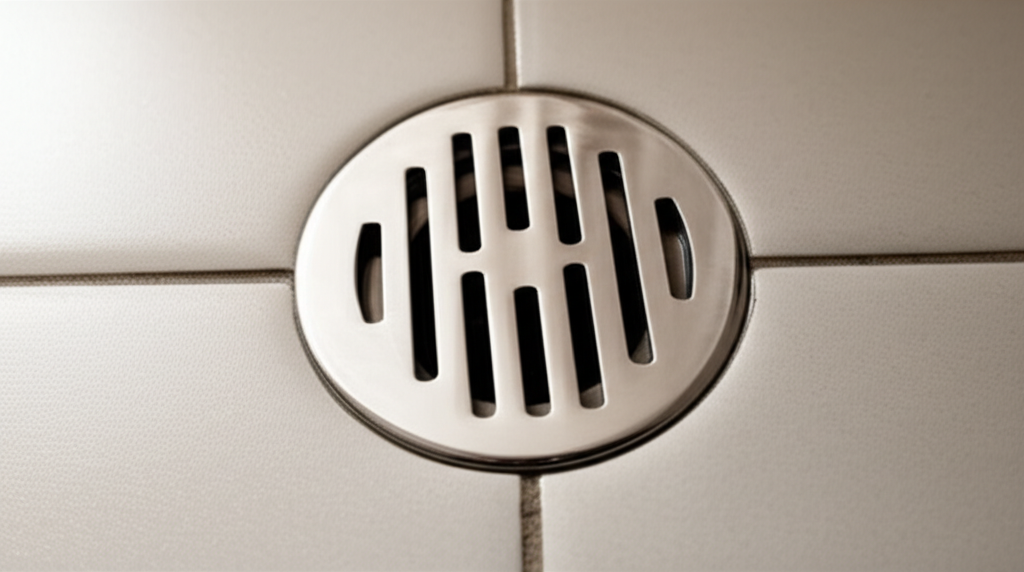
The American cockroach is the largest common household cockroach in Australia, with adults reaching 35 to 40 millimetres in length. It is uniformly reddish-brown across its body with a lighter, yellowish figure-eight pattern on the pronotum. This species thrives in warm, damp environments and is commonly found in sewer systems, stormwater drains, subfloor cavities, roof voids, and commercial kitchens across Queensland, New South Wales, and coastal regions. American cockroaches can fly short distances, which makes encounters particularly alarming during warm summer nights. They frequently enter homes through gaps around pipes and floor drains, especially after heavy rainfall floods their outdoor habitat. Because they travel through sewers, American cockroaches carry a particularly high bacterial load — they are significant vectors for Salmonella, dysentery, and gastroenteritis. If you are seeing large, reddish-brown cockroaches near drains, in the bathroom, or appearing suddenly after storms, they are almost certainly American cockroaches. Professional drain treatment may be required for persistent problems.
4. Smoky Brown Cockroach
Periplaneta fuliginosa
The Smoky Brown cockroach is uniformly dark mahogany to almost black, with no lighter markings — which distinguishes it from the similarly sized American and Australian cockroaches. Adults reach 30 to 35 millimetres and have long wings that extend beyond the abdomen, making them strong and active fliers. This species is common in Sydney, Brisbane, and coastal areas of New South Wales and Queensland. Smoky Brown cockroaches are strongly attracted to lights and frequently fly into homes through open windows and doors on warm, humid evenings. They prefer roof voids, gutters, tree hollows, dense garden vegetation, and mulch beds. High moisture is critical to their survival — they dehydrate faster than other species, which is why they are most problematic in humid coastal areas and during the wet season. Reducing outdoor lighting near entry points, installing insect screens on windows, and clearing leaf litter from gutters are effective first steps against Smoky Brown cockroaches.
5. Oriental Cockroach
Blatta orientalis
The Oriental cockroach is the darkest of the common Australian species — very dark brown to glossy black — and is sometimes called the "black beetle" or "waterbug" in Australia, although it is neither. Adults measure 20 to 27 millimetres. Males have shortened wings covering about three-quarters of the abdomen, while females have only vestigial wing pads. Neither sex can fly. Oriental cockroaches are sluggish compared to other species and prefer cool, damp environments: subfloors, garages, basements, laundry rooms, and around leaking pipes and drains. They tolerate cooler temperatures better than other cockroach species, making them more common in Melbourne, Canberra, Adelaide, and Hobart than tropical species. Oriental cockroaches produce a distinctive strong, musty odour — often the first sign of an infestation. They feed primarily on decaying organic matter and starchy materials. Fixing moisture problems and improving ventilation in damp areas are the most effective control measures for this species.
Quick Cockroach Identification Table
Use this comparison table to quickly identify which cockroach species you are dealing with. Check the size, colour, and location where you found it, then match against the table below.
| Species | Size | Colour | Wings / Flight | Primary Habitat |
|---|---|---|---|---|
| German | 12-15 mm | Light tan, 2 dark stripes | Wings present, rarely flies | Kitchen cupboards, bathrooms |
| Australian | 30-35 mm | Dark brown, yellow margin | Wings present, flies occasionally | Gardens, mulch, enters via doors |
| American | 35-40 mm | Reddish-brown | Wings present, flies short distances | Sewers, drains, subfloors |
| Smoky Brown | 30-35 mm | Dark mahogany (no markings) | Long wings, strong flier | Roof voids, gutters, attracted to lights |
| Oriental | 20-27 mm | Very dark brown / black | Short wings (male), vestigial (female), cannot fly | Damp subfloors, garages, drains |
Quick rule of thumb: Small and inside the kitchen = German cockroach (act fast). Large and came from outside = Australian, American, or Smoky Brown (seal entry points). Dark, slow, and in a damp area = Oriental cockroach (fix moisture issues).
Which Cockroaches Respond to Ultrasonic Repellers?
All five common Australian cockroach species are affected by ultrasonic frequencies in the 22-65 kHz range. Ultrasonic pest repellers work by emitting high-frequency sound waves that are inaudible to humans but create an environment that cockroaches find uncomfortable and disorienting. The sound interferes with their ability to communicate, navigate, and forage — which disrupts nesting behaviour and discourages them from settling in treated areas. For a detailed breakdown of the science, see our guide on how ultrasonic pest repellers work.
Indoor species (German cockroach): Ultrasonic repellers are most effective against German cockroaches because this species lives exclusively indoors where the sound waves are contained by walls, floors, and ceilings. Placing a device in the kitchen and another in the bathroom — the two rooms German cockroaches prefer — creates consistent coverage where the colony is most active.
Outdoor species entering indoors (Australian, American, Smoky Brown, Oriental): For species that primarily live outdoors but enter homes opportunistically, ultrasonic repellers function as an effective barrier. Positioning devices near common entry points — kitchens, laundries, bathrooms, and areas adjacent to exterior doors — creates an acoustic deterrent zone that discourages outdoor cockroaches from moving further inside.
Ultrasonic repellers work best as part of an integrated approach. Combine them with sealing gaps around pipes and doors, reducing moisture sources, and keeping outdoor vegetation trimmed back from the building perimeter. The BanishBugs ultrasonic repeller covers a standard room and operates continuously without chemicals, making it a practical long-term prevention tool for all five species.
When to Call a Professional Pest Controller
Not every cockroach sighting requires professional treatment, but certain situations demand expert intervention. Call a licensed pest controller if you are experiencing any of the following.
- Established German cockroach infestation. If you are seeing German cockroaches during daylight hours, the colony is already large. German cockroaches breed rapidly and develop chemical resistance faster than any other species. A qualified pest controller can apply targeted gel baits and insect growth regulators that reach deep into wall cavities and appliance housings where DIY methods cannot.
- Cockroaches emerging from drains and sewer connections. American cockroaches entering through floor drains indicate a potential issue with your building's sewer connection or drain traps. A pest professional can inspect and treat the drainage system, and recommend plumbing repairs if needed.
- Recurring infestations despite DIY efforts. If cockroaches keep returning after you have tried multiple control methods, it often indicates a hidden harbourage point or structural gap that requires professional inspection. Pest controllers use monitoring traps and inspection tools to locate colony centres that are invisible to homeowners.
- Rental properties and strata buildings. In multi-unit buildings, treating one apartment achieves nothing if neighbouring units harbour untreated colonies. Professional treatment across the entire building is typically the only effective solution. In rental properties, landlords are generally responsible for pest control under Australian tenancy law.
Frequently Asked Questions
How do I identify what type of cockroach is in my house in Australia?
Check three things: size, colour, and location. Small cockroaches (12-15mm) that are light brown with two dark stripes and found inside kitchen cupboards are German cockroaches. Large cockroaches (30-40mm) that are reddish-brown and appear near drains or after rain are likely American cockroaches. Dark brown cockroaches with a yellow margin on the thorax found near gardens are Australian cockroaches. Uniformly dark mahogany cockroaches attracted to lights at night are Smoky Brown cockroaches. Black, sluggish cockroaches in damp areas like garages or subfloors are Oriental cockroaches.
Which cockroach species is the most dangerous in Australia?
The German cockroach (Blattella germanica) is the most dangerous household cockroach species in Australia. It breeds indoors year-round, reproduces rapidly — a single female can produce over 30,000 offspring per year — and is strongly associated with the spread of Salmonella, E. coli, and allergens that trigger asthma. German cockroaches also develop resistance to chemical insecticides faster than other species, making them the hardest to eliminate once established.
What is the difference between a German cockroach and an Australian cockroach?
German cockroaches are small (12-15mm), light brown with two dark parallel stripes, and live exclusively indoors — typically in kitchens and bathrooms. Australian cockroaches are much larger (30-35mm), dark brown with a distinctive yellow margin on the thorax, and primarily live outdoors in garden mulch and bark. German cockroaches are far more problematic because they breed indoors, reproduce faster, and are harder to eliminate. Australian cockroaches usually only enter homes when outdoor conditions become extreme.
Do ultrasonic pest repellers work on all cockroach species in Australia?
Ultrasonic pest repellers operating in the 22-65 kHz frequency range affect all five common Australian cockroach species. The high-frequency sound waves create an environment cockroaches find uncomfortable, disrupting their foraging and nesting behaviour. Effectiveness is strongest in enclosed indoor spaces — making ultrasonic devices particularly useful against German cockroaches. For outdoor species like Australian and Smoky Brown cockroaches, repellers work best as a barrier at entry points such as kitchens, laundries, and bathrooms.
Stop Cockroaches Before They Move In
Join 4,200+ Australian homeowners using chemical-free ultrasonic pest control. The BanishBugs repeller is FREE — you only pay $12.95 shipping. Covers all 5 common cockroach species. 90-day guarantee.
Take the 30-Second Quiz