If you've ever flicked on the kitchen light at 2am and watched a cockroach scatter across the benchtop, you're not alone. Australia is home to roughly 450 native cockroach species, and at least half a dozen of those have made themselves thoroughly at home inside our houses, units, and rental properties.
Our warm, humid climate — particularly along the eastern seaboard from Far North Queensland down to Sydney and Melbourne — creates ideal breeding conditions for cockroaches year-round. Unlike cooler climates where roach activity drops in winter, Australian homeowners deal with cockroaches in every season. The CSIRO estimates that cockroach-related pest complaints increase by up to 30% during summer months when temperatures consistently exceed 30 degrees Celsius.
This guide covers everything you need to know about cockroach control in Australia: the species you're most likely encountering, why they're so hard to eliminate, six practical methods ranked by effectiveness, and prevention strategies that actually work in Australian conditions.
Common Cockroach Species in Australian Homes
Before you can effectively get rid of cockroaches, it helps to know which species you're dealing with. Each behaves differently, prefers different environments, and responds to different control methods. Here are the four species most commonly found in Australian homes.
German Cockroach (Blattella germanica)
The German cockroach is the most common indoor cockroach species in Australia and the hardest to eliminate. Adults are light brown with two dark stripes running down the shield behind the head, measuring 12 to 15 millimetres long. They reproduce faster than any other household species — a single female produces up to 40 eggs per capsule and can generate six capsules in her lifetime, meaning one female can be responsible for over 30,000 offspring in a single year. German cockroaches prefer warm, humid spaces close to food and water: inside dishwashers, behind fridges, around sink plumbing, and inside kitchen cabinetry. They almost never live outdoors in Australia. If you're seeing small cockroaches inside kitchen cupboards or around bathroom drains, they're almost certainly German cockroaches.
American Cockroach (Periplaneta americana)
Despite the name, the American cockroach thrives across Australia, particularly in Queensland, New South Wales, and coastal regions. It's the largest common household cockroach, with reddish-brown adults reaching 35 to 40 millimetres in length. These roaches can fly short distances, which makes late-night encounters particularly unsettling. American cockroaches prefer warm, damp environments and are commonly found in subfloor areas, garages, roof voids, drains, and sewer systems. They often enter homes through gaps around pipes and drains, especially after heavy rainfall floods their outdoor habitat. If you're seeing large, flying cockroaches inside your home during summer storms, they're likely American cockroaches driven indoors by weather.
Australian Cockroach (Periplaneta australasiae)
The Australian cockroach looks similar to the American cockroach but is slightly smaller (30 to 35 millimetres) and distinguished by a yellow margin on the thorax and yellow streaks along the front edges of its wings. Despite its name, it likely originated in Africa but has been established in Australia for centuries. This species primarily lives outdoors in garden mulch, bark, woodpiles, and compost bins, feeding on decaying plant matter. It enters homes opportunistically — usually through open doors, windows, or gaps around utilities — particularly when outdoor conditions become too hot, dry, or wet. If you're finding medium-to-large cockroaches near windows, in your laundry, or around potted plants on verandahs, they may be Australian cockroaches.
Smokybrown Cockroach (Periplaneta fuliginosa)
The smokybrown cockroach is uniformly dark brown to mahogany in colour, without the lighter markings of its relatives. Adults reach 30 to 35 millimetres and are strong fliers, particularly active on warm, humid evenings. This species is common in Sydney, Brisbane, and coastal regions of New South Wales and Queensland. Smokybrown cockroaches are attracted to lights and frequently enter homes through open windows and doors during evening hours. They prefer roof voids, gutters, tree hollows, and dense garden vegetation. High moisture is critical for their survival — they dehydrate faster than other species, which is why they're most problematic in humid coastal areas. Reducing outdoor lighting and sealing window screens are effective first steps against this species.
Why Cockroaches Are So Hard to Get Rid Of
Cockroaches have survived for over 300 million years — they predate the dinosaurs. That evolutionary track record means they've developed remarkable survival mechanisms that make them frustrating to control in modern Australian homes.
Breeding speed. A single pair of German cockroaches can theoretically produce over 300,000 descendants in one year under ideal conditions. Even under real-world conditions, a small infestation can become a large one within weeks. By the time you're regularly seeing cockroaches during daylight hours, the colony behind your walls is likely already substantial.
Hiding ability. Cockroaches are thigmotactic — they actively seek tight, enclosed spaces where their bodies touch surfaces on all sides. This means they squeeze into gaps as narrow as 1.5 millimetres, hiding inside wall cavities, behind power outlets, under appliances, inside the motor housing of your fridge, and in dozens of other spaces that sprays and baits simply cannot reach.
Chemical resistance. This is a growing problem worldwide, and Australia is no exception. Research published in the journal Scientific Reports found that German cockroach populations can develop cross-resistance to multiple insecticide classes within a single generation. A population exposed to one type of pyrethroid spray can develop resistance not only to that chemical but to entirely different insecticide families simultaneously. This means the spray that worked last summer may be completely ineffective this year.
Nocturnal behaviour. Cockroaches are most active between midnight and dawn, when homeowners are asleep. The ones you see during the day represent only a fraction of the population — typically around 20%. The remaining 80% stay hidden, breeding and feeding in spaces you never see.
6 Methods to Get Rid of Cockroaches in Australia (Ranked)
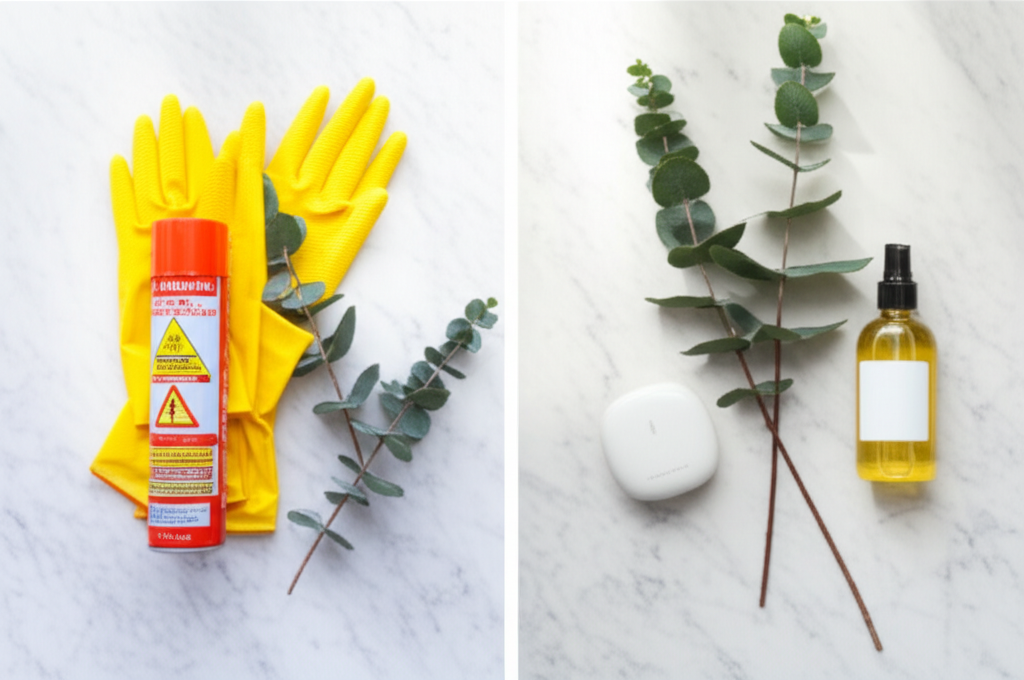
Not all cockroach control methods are created equal. Here's an honest assessment of six common approaches, ranked by their effectiveness for Australian conditions.
| Method | Cost | Chemical-Free | Duration | Best For |
|---|---|---|---|---|
| Chemical Sprays | $15-$40 | No | Days-weeks | Immediate knockdown |
| Baits & Traps | $10-$30 | No | 1-3 weeks | Targeting colonies |
| Essential Oils | $10-$25 | Yes | Hours | Mild deterrence |
| Diatomaceous Earth | $10-$20 | Yes | 1-2 weeks | Dry areas, crevices |
| Professional Exterminator | $200-$400/visit | No | Months | Severe infestations |
| Ultrasonic Repellers | $0-$13 (BanishBugs) | Yes | Ongoing | Continuous prevention |
1. Chemical Sprays
Surface sprays and aerosol insecticides remain the most popular first response for Australian homeowners. Products containing pyrethroids (such as Mortein and Raid) kill cockroaches on contact and provide a residual barrier on treated surfaces for several weeks.
Pros: Fast-acting, widely available at Coles, Woolworths, and Bunnings. Provides immediate satisfaction when you can see cockroaches dying.
Cons: Surface sprays only kill cockroaches that cross treated areas — they don't reach the colony inside your walls. Chemical residue on kitchen surfaces poses health concerns, particularly in homes with children and pets. The Australian Pesticides and Veterinary Medicines Authority (APVMA) recommends ventilating treated areas and keeping children and animals away from sprayed surfaces until completely dry. Most critically, cockroach populations develop resistance to pyrethroids, often within a single breeding cycle.
2. Baits and Traps
Gel baits and bait stations (such as Advion and Combat) are more effective than sprays for long-term cockroach control. Cockroaches eat the bait and carry the poison back to the colony, where it spreads through contact and coprophagy (cockroaches eating each other's droppings).
Pros: Targets the entire colony, not just visible roaches. Low-profile placement under sinks and behind appliances. More targeted than broadcast spraying.
Cons: Takes 1 to 3 weeks to see significant results. Bait stations need regular replacement. Still introduces chemicals into your home, and some formulations contain attractants that can draw cockroaches from neighbouring properties. Less effective against large populations that overwhelm the bait supply.
3. Essential Oils and Natural Deterrents
Peppermint oil, tea tree oil, and eucalyptus oil are frequently recommended as natural cockroach deterrents. Some Australian homeowners also use cucumber peels, bay leaves, and catnip as repellents.
Pros: Completely chemical-free. Pleasant scent for humans. Safe around children and pets. Readily available.
Cons: Scientific evidence for effectiveness is limited. A study published in the Journal of Economic Entomology found that while some essential oils show repellent properties in controlled laboratory conditions, their effectiveness diminishes rapidly in real-world environments. The oils evaporate quickly, requiring constant reapplication. Essential oils may deter cockroaches from specific spots temporarily but won't reduce a colony or prevent re-entry into your home.
4. Diatomaceous Earth
Food-grade diatomaceous earth (DE) is a fine powder made from fossilised algae. It works mechanically rather than chemically — the microscopic particles damage the cockroach's waxy exoskeleton, causing it to dehydrate and die within 24 to 48 hours of contact.
Pros: Chemical-free and non-toxic to humans and pets. No resistance development possible (it's a physical mechanism, not chemical). Inexpensive and long-lasting in dry conditions.
Cons: Completely ineffective when wet — a significant limitation in humid Australian coastal climates, bathrooms, and kitchens. Creates a visible powder residue. Only works in areas where cockroaches walk through it. Requires precise placement in crevices, behind appliances, and inside wall cavities for best results.
5. Professional Exterminators
Licensed pest controllers use commercial-grade insecticides, growth regulators, and targeted application methods unavailable to consumers. A professional treatment typically involves inspection, targeted baiting, crack-and-crevice treatment, and perimeter spraying.
Pros: Most effective single intervention for severe infestations. Professional-grade chemicals are stronger and longer-lasting. Technicians can identify entry points and harbourage areas you might miss.
Cons: Expensive — expect to pay $200 to $400 per visit in most Australian cities, with quarterly follow-ups recommended ($800 to $1,600 per year). Results are temporary without ongoing prevention. Still relies on chemicals, and treated areas need ventilation. Many pest control companies require 12-month contracts. Australian homeowners in rental properties may face disputes with landlords over who pays for treatment.
6. Ultrasonic Pest Repellers
Ultrasonic pest repellers emit high-frequency sound waves — typically between 25 and 65 kHz — that are inaudible to humans and household pets but create a hostile acoustic environment for cockroaches and other pests. The devices plug directly into a power outlet and provide continuous, 24/7 coverage.
Pros: Completely chemical-free — no toxic residue on surfaces, no risk to children or pets. Zero ongoing cost after purchase (uses minimal electricity). Works continuously without replacement or reapplication. Covers an entire room from a single power outlet. No resistance development. No mess, no odour, no maintenance.
Cons: Takes 2 to 3 weeks for full effect as cockroaches gradually vacate treated areas. Effectiveness can be reduced by furniture blocking sound wave propagation. Works best as part of an integrated approach alongside good sanitation.
Worth knowing: BanishBugs ultrasonic repellers are currently available free — you only pay $12.95 shipping. The device is backed by a 90-day money-back guarantee and has a 4.9-star rating from over 4,200 verified Australian customers. If you're looking for a chemical-free solution, it's a low-risk option to test alongside other methods. Take the 30-second quiz to find the right coverage plan for your home.
Prevention Tips for Australian Homes
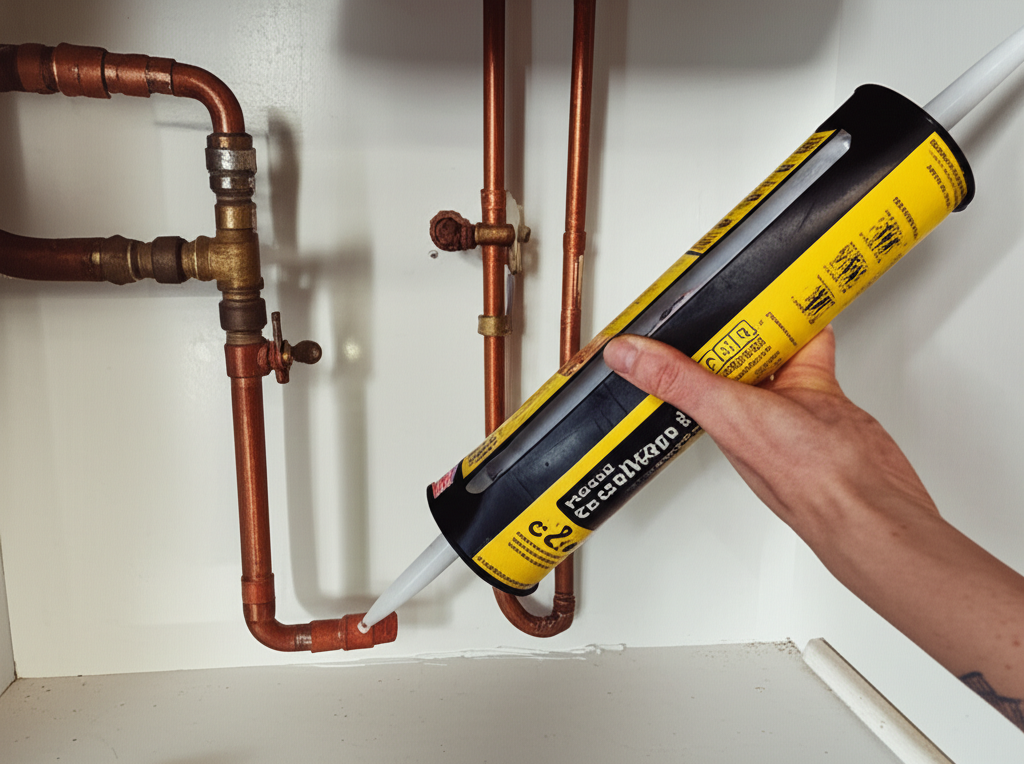
Regardless of which control method you choose, prevention is the foundation of long-term cockroach management. These practical steps are specifically tailored to Australian conditions.
- Seal entry points. Inspect the perimeter of your home for gaps around pipes, air conditioning units, vents, and door frames. Use silicone caulk or expanding foam to seal any gap larger than 1.5 millimetres. Pay special attention to where plumbing enters the house — this is the number-one entry point for American cockroaches coming from the sewer system.
- Fix moisture problems. Cockroaches need water more urgently than food. Repair dripping taps, fix leaking pipes under sinks, and address condensation around windows and air conditioning units. In humid Queensland and northern NSW homes, run a dehumidifier or exhaust fan in bathrooms and laundries. Empty pet water bowls overnight.
- Store food properly. Transfer open packages of cereal, flour, pasta, and pet food into airtight containers. Wipe down benchtops and stovetops every evening. Don't leave dirty dishes in the sink overnight — this is the single biggest cockroach attractant in Australian kitchens.
- Manage rubbish. Use bins with tight-fitting lids and take rubbish out daily, particularly during summer. Keep wheelie bins away from the house and rinse recycling before storing it.
- Reduce outdoor harbourage. Clear leaf litter, mulch, and woodpiles from directly against your home's exterior walls. Trim vegetation so it doesn't touch the building. Clean gutters regularly — blocked gutters create the damp, sheltered environment smokybrown cockroaches love.
- Manage outdoor lighting. Smokybrown and Australian cockroaches are strongly attracted to light. Switch outdoor lights to yellow-spectrum or sodium vapour bulbs, which are less attractive to flying insects. Keep curtains closed on lit rooms during summer evenings.
- Inspect deliveries. Cockroaches frequently hitchhike into homes via cardboard boxes, grocery bags, and secondhand furniture. Inspect packaging before bringing it inside and break down cardboard boxes immediately rather than storing them in the garage.
Frequently Asked Questions
What is the fastest way to get rid of cockroaches in Australia?
The fastest short-term method is gel bait stations placed in high-activity areas like under sinks, behind fridges, and inside cupboards. For long-term cockroach control, combine bait stations with an ultrasonic pest repeller and good sanitation practices. Seal entry points, eliminate moisture sources, and store food in airtight containers. Professional exterminators can clear severe infestations within 1 to 2 visits, but ongoing prevention is essential to stop roaches from returning.
Are cockroaches in Australia dangerous?
Yes, cockroaches pose genuine health risks. They carry bacteria including Salmonella and E. coli, and their droppings, shed skins, and saliva contain allergens linked to asthma and allergic reactions — particularly in children. The World Health Organisation identifies cockroaches as carriers of intestinal diseases such as dysentery and gastroenteritis. In Australian homes, cockroaches contaminate food preparation surfaces and can trigger respiratory issues in sensitive individuals.
Why do I have cockroaches even though my house is clean?
A clean house reduces cockroach attractants but doesn't eliminate them entirely. Cockroaches enter Australian homes seeking three things: water, warmth, and shelter. Even spotless kitchens have residual moisture around pipes, condensation on windows, and micro-gaps around door frames. Australia's warm, humid climate means roaches are constantly seeking indoor shelter — especially during summer storms and extreme heat. They can enter through gaps as narrow as 1.5 millimetres, via plumbing connections, or hitchhike in grocery bags and cardboard boxes.
Do ultrasonic pest repellers actually work on cockroaches?
Ultrasonic pest repellers emit high-frequency sound waves that create an uncomfortable environment for cockroaches and other pests. Multiple peer-reviewed studies have shown that ultrasonic frequencies can disrupt cockroach behaviour, reducing their activity in treated areas. Effectiveness depends on proper placement — devices should be positioned in rooms where cockroach activity is highest and not blocked by furniture. Many Australian homeowners use ultrasonic repellers as part of an integrated pest management approach, combining them with good sanitation and sealing entry points for best results.
Ready to Banish Cockroaches for Good?
Join 4,200+ Australian homeowners who've switched to chemical-free pest control. The BanishBugs ultrasonic repeller is FREE — you only pay $12.95 shipping. Backed by a 90-day guarantee.
Take the 30-Second Quiz